 Scribba
Procrastination usually isn't laziness. Most students who put off studying care about the class, and that's often part of the problem. The task feels big, vague or uncomfortable, and something else on the screen feels better right now. Putting it off makes a bad feeling go away for a few minutes. Then it comes back, bigger, with less time left.
So the fix isn't more willpower. It's making studying easier to start and distractions harder to reach. Here's what helps, starting with why you're stuck.
Figure out which kind of stuck you are
Different causes need different fixes. Next time you catch yourself avoiding work, ask which of these fits:
- The task is vague. "Study for bio" has no first step, so you never take one.
- The task is huge. A ten-page paper or a whole unit feels like too much to begin.
- The task feels bad. You're confused, behind or worried about the grade, and opening the notes means facing that.
- Something else is louder. Your phone, a group chat, a show, a roommate.
- You're running on empty. Sometimes "procrastination" is your body asking for food, sleep or a break.
Most stuck sessions involve more than one of these. Pick the fix for whichever is loudest today.
Make the first step tiny and specific
The single most useful habit is turning a task into a first step so small it feels almost silly. Not "study chapter 6" but "open the chapter 6 notes and read the first page." Not "write the essay" but "write three rough sentences about my argument."
Small steps work because starting is the hard part. Once you're moving, keeping going is usually easier than it looked. And if you stop after the tiny step, you've still done more than nothing.
When you plan your week, write the first action next to each task. Then tomorrow you won't have to decide what to do, only do it.
Use if-then plans
A plan with a when and a where is more likely to happen than a vague intention. Psychologists call these implementation intentions, and they're simple: "If it's 2 p.m. on Tuesday, then I go to the library's third floor and start the chem problem set."
Tie studying to something that already happens:
- "After my last class, I review today's notes before I leave the building."
- "When I sit down after dinner, I do my due flashcards before I open anything else."
- "If I catch myself scrolling during a study block, I put my phone in my bag and do one problem."
Write them down, and put them in your study schedule as real blocks.
Put distractions out of reach
You don't need iron discipline if the distraction isn't there. A few changes help:
- Put your phone in another room, or at least in a bag across the room. Out of sight works better than face down.
- Turn on a Focus mode on your phone and iPad so notifications wait until you're done.
- Study somewhere you only study. A library desk, an empty classroom. Studying in bed makes it easy to drift.
- Close everything you don't need. One notebook, one task.
- Work near other people who are working. Sitting with a friend who's also studying, even in silence, makes it easier to keep going. See how to study with a group for ways to make that useful.
Shrink the time, not just the task
A fixed, short block lowers the stakes. "I'll work for 25 minutes, then take a break" is much easier to agree to than "I'll study tonight." The Pomodoro technique is built on that idea, and how to use a Pomodoro timer for studying covers it in detail.
On the hardest days, try five minutes. Tell yourself you're allowed to stop after five. Often you won't want to.
Deal with the feeling, not just the task
When a class makes you anxious, avoiding it feels like relief. A few ways through:
- Start with something you can do. Review a topic you understand before the one you don't. A quick win makes the next step easier.
- Lower the bar for a first try. Messy notes, a rough outline or a half-worked problem all count. You can fix them later.
- Turn the fog into a question. "I don't get any of this" is hard to act on. "Why does step two use the chain rule?" is something you can bring to office hours.
- Go easy on yourself after a bad day. Beating yourself up makes the next session feel worse, which makes it easier to avoid. Note what got in the way, and start again tomorrow.
If procrastination is constant, affects every class, or comes with feeling low or overwhelmed most days, talk to someone. Most colleges have academic coaching, a learning center or counseling services, and they help students with exactly this.
Tip: end each study session by writing the very next step on the page, like "start at problem 4." Your next session then begins with a decision already made.
How Scribba makes starting easier
Scribba is an iPad notes app for class. It can't make you study, but it removes a few small frictions that make starting harder.
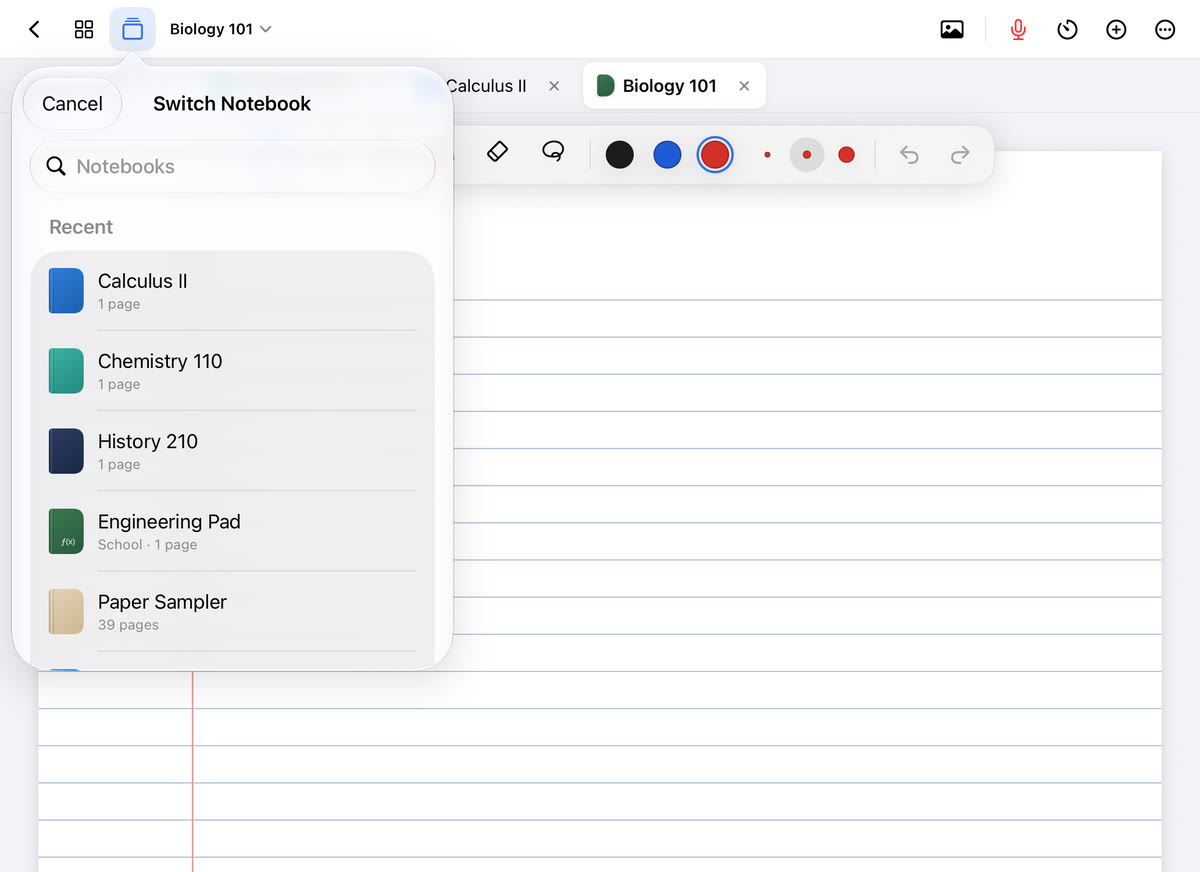
- It opens straight to your library, and Jump Back In reopens a notebook on the page you left. Your first step can be "open Scribba and tap Jump Back In," which is about as small as a step gets.
- All due flashcards in one session. You can study every due card across your decks at once, so "do my flashcards" is one decision, not five. Cards come back on a spaced repetition schedule, so you don't have to work out what to review.
- Study tape turns a page of notes into a quick quiz. Drag tape over terms or diagram labels and tap to peek. Testing yourself like this is active recall, and it feels more active than rereading, which helps on low-motivation days.
- The focus timer is a Pomodoro timer that follows you between notebooks, so a study block keeps running when you switch classes.
All of these work on any iPad that runs Scribba, without Apple Intelligence. If the iPad itself is part of the problem, avoiding distractions on your iPad has setup tips.
Frequently asked questions
Does procrastinating mean I'm lazy?
Usually not. It's more often a way of avoiding a task that feels vague, too big or stressful. Making the task smaller and clearer tends to help more than pushing harder.
What if I've already fallen behind?
List what's due soonest and what's worth the most, then take the smallest useful step on the top item. If you need an extension, ask your professor early; that conversation is easier before the deadline than after it.
What if I start but can't focus?
Take a short break away from screens, and check the basics: sleep, food, water. Then switch to something more active, like quizzing yourself or working a problem, instead of rereading.