 Scribba
A week is enough time to study for a midterm well, as long as you don't spend the first four days thinking about it. Midterms cover less than a final, usually one class and half a semester, so a focused week can take you from "I've been to the lectures" to "I can answer the questions."
This is a day-by-day plan for that week. It assumes the exam is the morning after day 7. If you're preparing for several exams at once, our guide to studying for finals with your iPad notes covers scheduling across classes.
Before day 1: find out what's on it
Spend ten minutes on this, because it shapes everything else.
- Check the syllabus for which chapters and lectures are covered.
- Learn the format. Multiple choice, short answer, problems and essays each need different practice.
- Look for a review sheet or practice exam. If your professor posted one, it's the most useful page you have this week.
- Ask if you're unsure. "Will the midterm cover this week's lecture?" is a normal question to ask in class or office hours.
Day 1: gather everything
Put all your material in one place: lecture notes, slides, handouts, homework with feedback, readings and the review sheet. Then make a topic list, one line per lecture or major idea. This list is your map for the week.
Don't study yet. The goal today is to see the whole exam at once, so nothing surprises you on day 6.
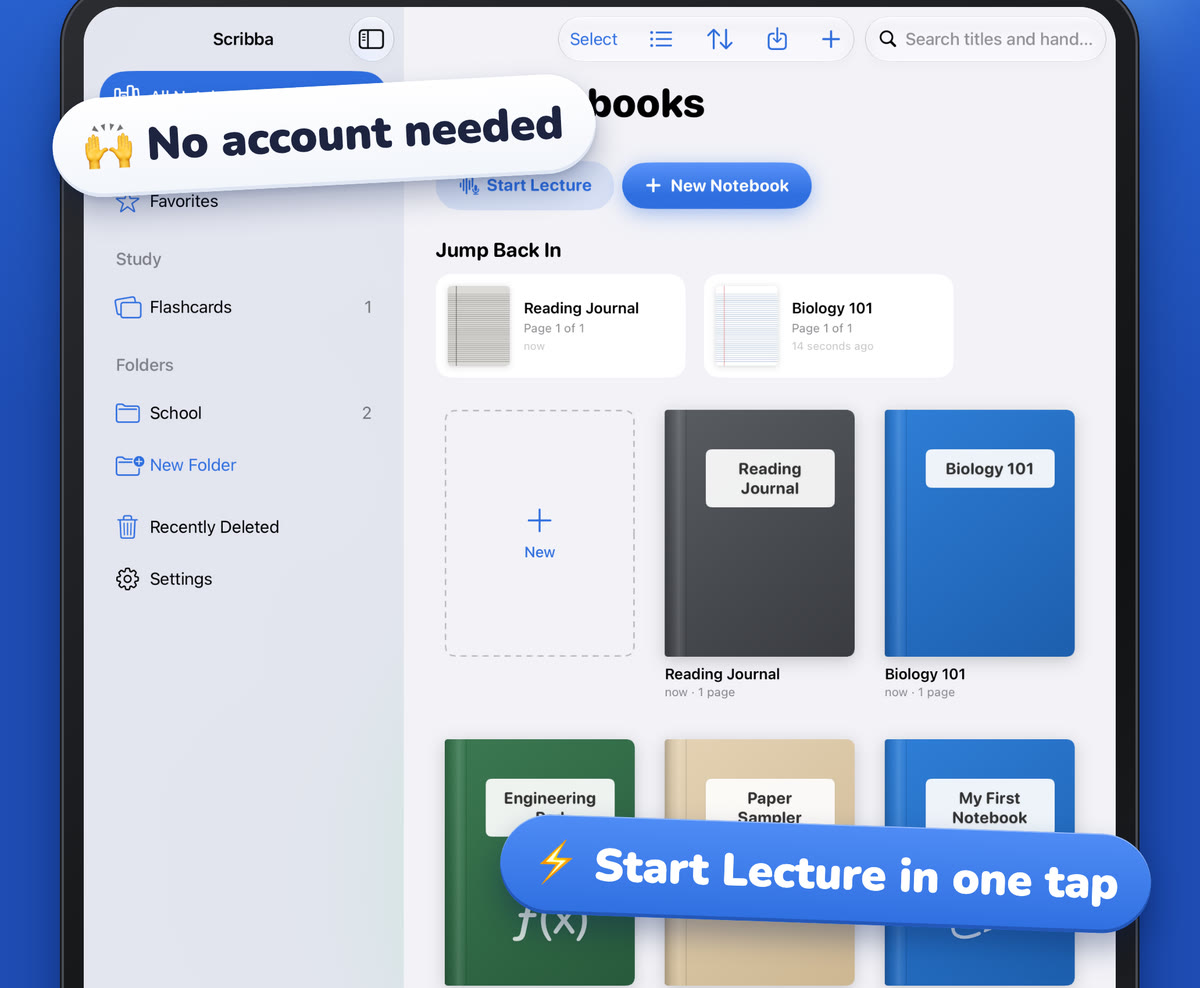
In Scribba: if you used Start Lecture to begin each class, every lecture already has a dated bookmark, so the notebook's table of contents is your topic list. Import any slides you haven't added yet as PDFs, and scan paper handouts with the camera so everything lives in the class notebook.
Day 2: find the gaps
Go through your topic list and spend a few minutes on each one with a blank page. Write down what you can remember: the main idea, key terms, a diagram, a typical problem. Then check your notes.
Topics where you filled the page are in good shape. Topics where you stalled after two lines are where the week's time should go. Mark them. This is more honest than flipping through your notes and asking "do I know this?", because almost everything looks familiar when you're reading it.
Also look for real holes: a lecture you missed, a page that trails off, a diagram you can't explain anymore. Fill those today, from a classmate, the textbook or the recording if you have one.
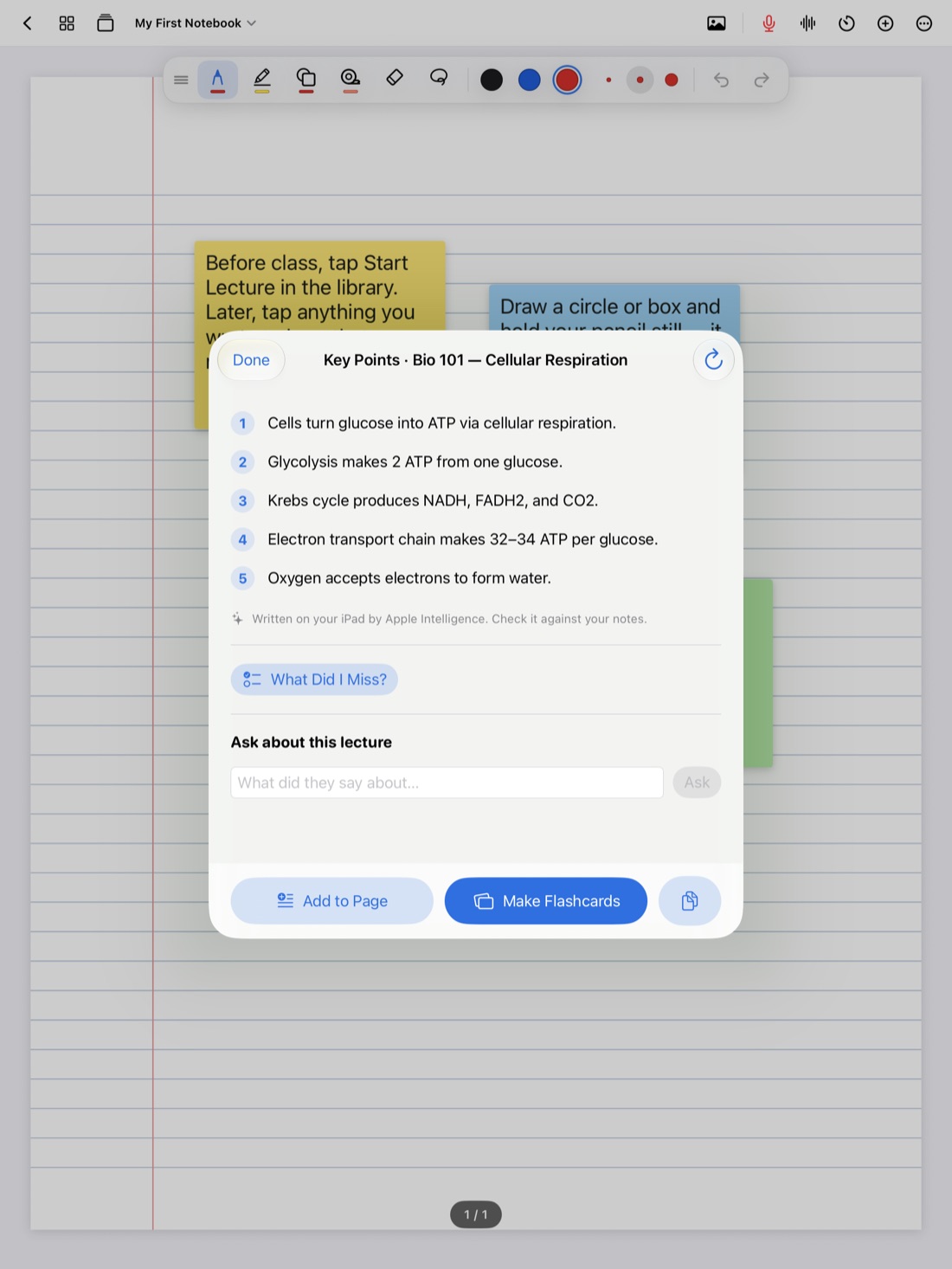
In Scribba: on iPads that support Apple Intelligence, with it turned on, Study Guide puts the key points of every lecture in the notebook on one sheet, split at each Start Lecture page. Compare it with your blank-page attempts. What Did I Miss? compares a lecture's key points with what you wrote and lists what your notes left out. See what did I miss for how it works. If you recorded a lecture, tap the line where your notes trail off to hear that moment again, or search the transcript for a term you never wrote down.
Day 3: active recall on the weak topics
Today you work on the topics you marked. For each one:
- Make flashcards for terms, definitions, formulas and dates.
- Turn headings into questions and answer them out loud without looking.
- Cover your notes and explain diagrams and processes from memory.
Keep it effortful. If you're mostly reading, close the notes and ask yourself something. Our guide to the active recall study method has more ways to do this.
In Scribba: Vocabulary and Cornell Notes pages turn into flashcards from your handwriting, with no Apple Intelligence needed. Check the words it read before you study. With Apple Intelligence, a Study Guide can become a deck too. Use study tape to cover labels and steps on your own pages, then tap to peek.
Day 4: practice problems
For classes with problems, today is the most important day. Rework homework without looking at your old answers. Then try problems you haven't seen: end-of-chapter questions, a practice exam, or examples from lecture with the solution covered.
For essay or short-answer exams, write practice answers instead. Pick likely questions and outline an answer from memory in a few minutes each.
Each time you get something wrong, write down the exact step or idea you missed. That list becomes your study list for day 5.
Day 5: spaced review
Come back to everything from days 3 and 4. Go through your flashcards again, redo the problems you got wrong, and re-explain the topics you marked on day 2.
This second pass is where things start to stick. Coming back to material after a day or two, and having to reach for it, does more than going over it again the same afternoon. See spaced repetition flashcards for why.
Mix topics today, too. On the exam, questions won't come grouped by lecture.
In Scribba: decks use spaced repetition, and you can study all your due cards at once. Keep up with them every day from here to the exam.
Day 6: take a practice exam
Simulate the real thing. Use a practice exam if you have one, or make your own from homework problems, review sheet questions and flashcards. Time yourself, close your notes and put your phone away.
Then grade it. Every miss goes on a short final list: the handful of things you'll review tomorrow. By now that list should be short.
Day 7: the night before
No new material today. Review your final list, go through your due flashcards once, and look over your topic list one more time. If something still won't stick, write it on a single summary page you can glance at in the morning.
Then pack what you need (calculator, pencils, ID), stop studying at a reasonable hour and get a full night of sleep. Sleep helps your brain hold on to what you learned this week, and you'll recall more with a rested head than with an extra hour of cramming.
Tip: on exam morning, do a few minutes of easy recall, like naming the main topics from memory, rather than opening a new chapter. It warms you up without adding stress.
Frequently asked questions
Is a week really enough to study for a midterm?
For most midterms, yes, if you follow a plan and focus on recall and practice rather than rereading. Starting earlier helps, but a focused week goes a long way.
What if I have two midterms in the same week?
Run both plans side by side and split each day between them. Give more time to the earlier exam and to the class where day 2 turned up the most gaps.
Do I need lecture recordings for this plan?
No. Recordings help you fill gaps, but the plan works with any notes. A classmate's notes or the textbook can fill a missed lecture just as well.