 Scribba
Most students study the same way: nothing for weeks, then a long night before the exam going through every card in the deck. It works well enough to pass. A week later, much of it has faded, and when the final comes around you're learning the same material for the second time.
Spaced repetition is a better way to use the same hours. Here's what it is, why it works, and how to make it a habit that takes a few minutes a day.
What spaced repetition is
Spaced repetition means reviewing something at growing intervals: soon after you learn it, then again a little later, then later still. Each time you remember a card, the gap before you see it again gets longer.
A new card might come back the next day, then a few days later, then a week, then a couple of weeks, then a month. Cards you know well fade into the background. Cards you're still shaky on keep showing up. Over a semester, you spend your study time where it's needed instead of rereading things you already know.
Why it works
Two ideas from memory research explain it, and both are well established.
You forget fast at first, then slower. Right after a lecture, memory fades quickly. Each time you successfully recall something, it fades more slowly afterward. So the first review should come soon, and later reviews can be spread further apart.
Remembering is what builds memory. Pulling an answer out of your head, called active recall, strengthens memory more than reading the answer again. A review works best when it's a little hard, when you have to reach for the answer. Spacing makes sure that happens: by the time a card comes back, you've almost forgotten it, so recalling it takes real effort.
Cramming skips both. Seeing a card ten times in one night feels like progress, because by the tenth time the answer is right there. But that ease comes from having just seen it, not from long-term memory, and it doesn't last.
Build a daily review habit
Spaced repetition only works if you show up. The good news is that daily sessions are short. A few habits help:
- Attach it to something you already do. Review on the bus, before your first class, or right after dinner. A fixed spot in the day beats a vague plan to study "later."
- Keep sessions small. Ten or fifteen focused minutes every day usually does more than an hour once a week. If a session drags, stop and come back.
- Answer before you flip. Say the answer out loud, or write it in the margin, before you look. If you only think "yeah, I know that," you'll overrate yourself.
- Make cards the same day as the lecture. New material goes into the schedule while it's fresh, and the first review comes when it helps most.
- Don't add more than you can review. If your daily review keeps growing, slow down on new cards for a few days and let the schedule catch up.
- Fix bad cards when you meet them. If you keep missing a card because it's vague or asks two things, rewrite it. See how to write good flashcards.
Tip: start in the first week of the semester, even with only a handful of cards. A habit is much easier to build when the daily session takes two minutes.
How spaced repetition works in Scribba
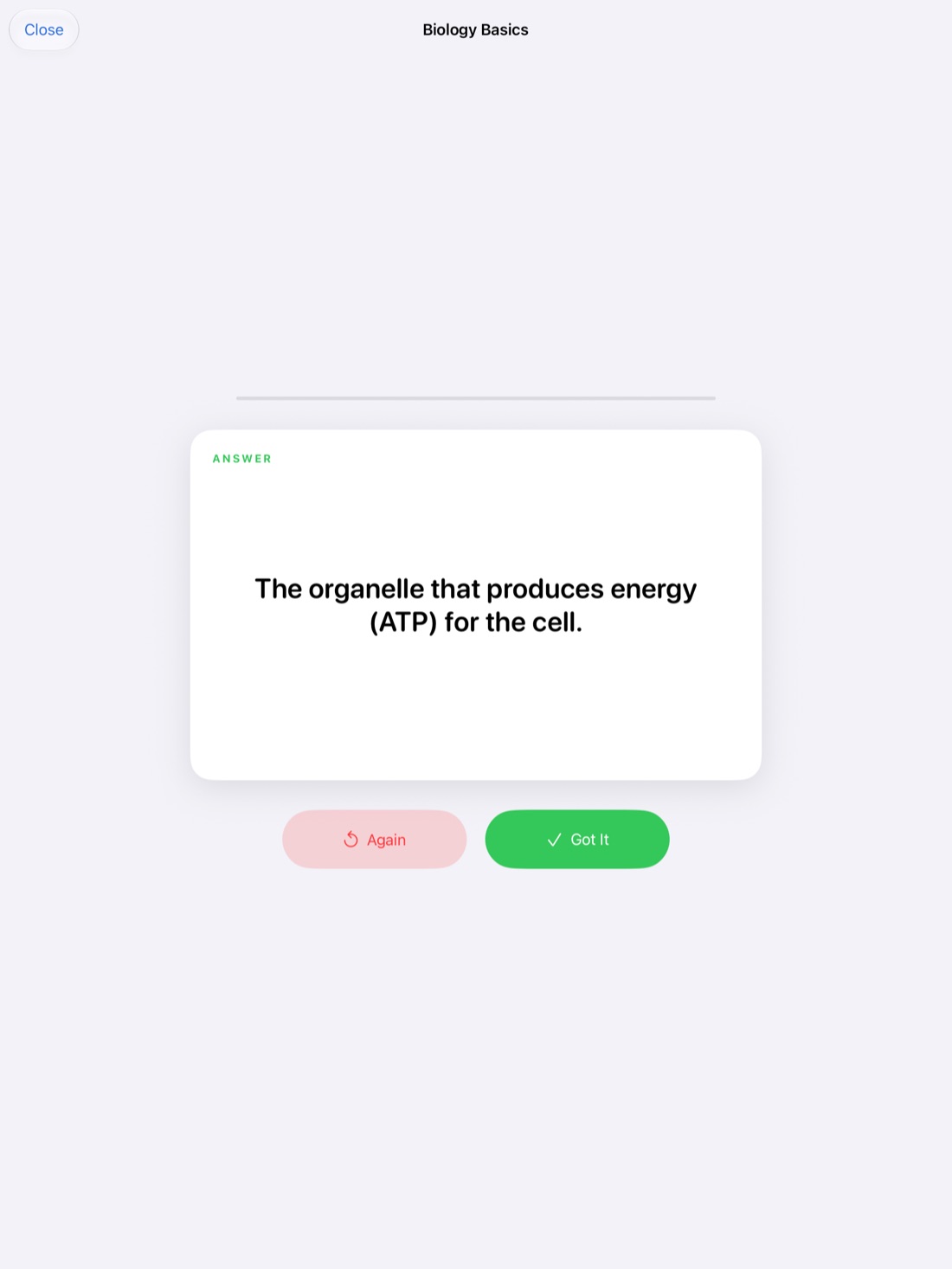
Every flashcard deck in Scribba uses spaced repetition, so you don't have to track anything yourself. After you study a card, it comes back after 1 day, then 3, 7, 14 and 30 days. You open a deck, flip through what's due, and Scribba decides when each card comes back.
You can also study all your due cards at once. If you have decks for biology, history and Spanish, you don't need to open each one: start a single session with every card that's due today, across your decks, and you're done.
Scribba's Focus timer is useful here too. It's a Pomodoro timer that follows you between notebooks, so you can set a short block, review your due cards, and then move to the reading for your next class without restarting it.
Where the cards come from
Spaced repetition only helps if making cards is easy enough that you actually do it. In Scribba, you don't retype your notes. Vocabulary and Cornell Notes pages turn into cards from your handwriting, and on iPads that support Apple Intelligence, with it turned on, you can also make cards from any page or a lecture transcript. The details are in making flashcards from handwritten notes.
If you'd rather keep reviewing on your phone, you can export a deck to Quizlet or Anki.
Spaced repetition before an exam
Spaced repetition is at its best over weeks, but it still helps when an exam is close. Keep up with your due cards every day, and spend the rest of your time on practice problems and past exams rather than flipping through the whole deck again. For a full plan, see how to study for finals with your iPad notes.
Not everything belongs on a card, either. For diagrams, processes and worked problems, covering parts of the page and recalling them works better. That's what study tape is for.
Frequently asked questions
How long should I review each day?
A short session is usually enough once the habit is going. What matters most is reviewing every day, not how long each session is.
What if I miss a few days?
Pick up where you left off. Cards that came due while you were away are still waiting, so studying all your due cards at once catches you up. Go easy on new cards until you're back on track.
Is spaced repetition only for memorizing facts?
It works best for things with a clear answer: terms, dates, formulas, vocabulary. For understanding how ideas connect, pair it with practice problems, explaining topics out loud, and quizzing yourself on full pages of notes.