 Scribba
Film classes have a note-taking problem no other class has: the most important material happens in a dark room, at 24 frames per second, and you can't pause it. You're trying to watch closely and write at the same time, without lighting up the room or missing the shot you're writing about.
Then, after the screening, you need notes good enough to write a close analysis of a scene you saw once. Here's how to take notes that survive the dark, how to break down shots, and how to use storyboards to study a sequence instead of just plan one.
Before the screening
The more you know going in, the less you need to write in the dark.
- Write the basics first, in the light: title, director, year, country, and the week's theme or reading.
- Know what to watch for. If the week is about editing, you're looking for cuts. If it's about sound, listen for it. Write the focus at the top of the page.
- Read the assigned reading before, not after. It gives you the terms you'll use in your notes.
- Prepare a few headings with space under each: story, camera, editing, sound, mise-en-scène, questions.
Screening notes in the dark
The light from a bright page bothers people around you, and it pulls your eyes off the screen. Two fixes help most.
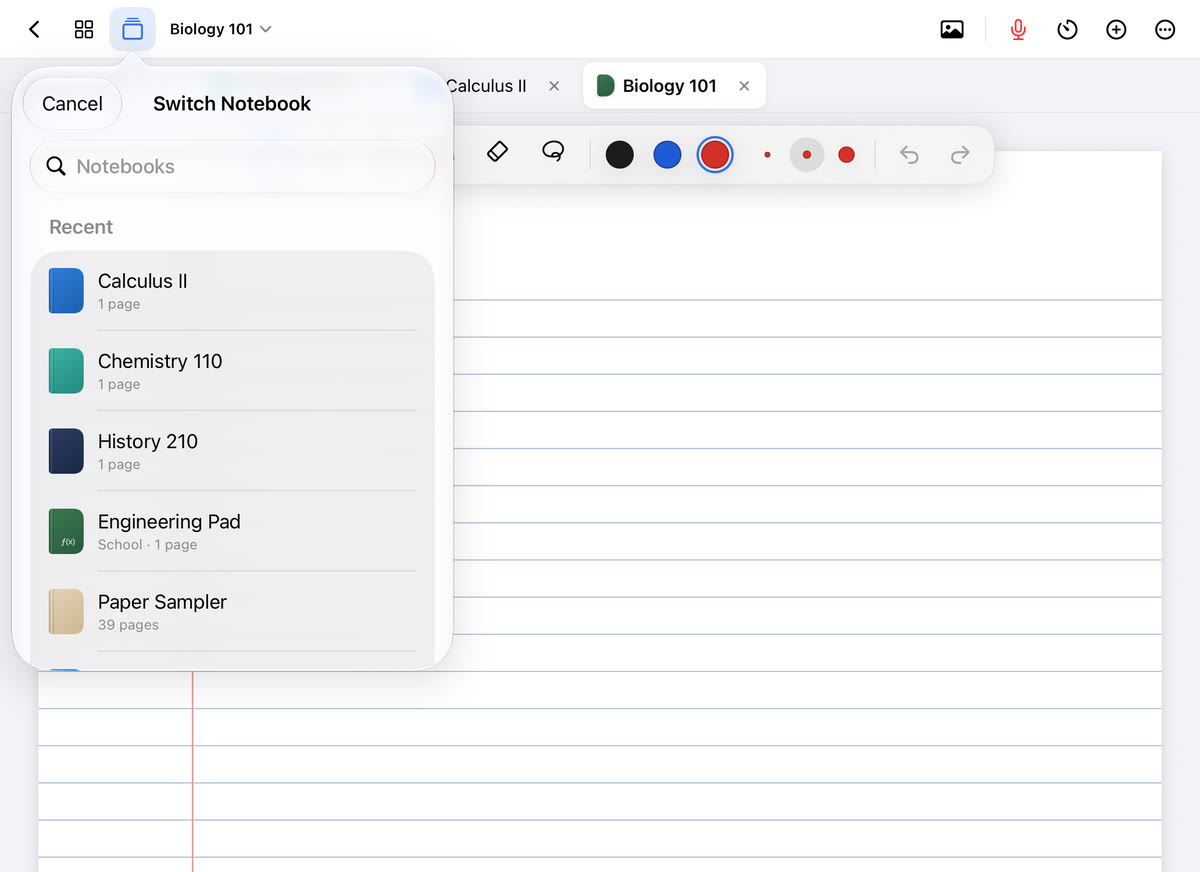
First, use a dark page. Scribba has dark papers, Charcoal and Black, among its 9 paper colors. Light ink on a dark page gives off much less light than a white page. Change a page's paper from the page sidebar before the lights go down, and pick a light ink color, since black ink disappears on dark paper. Turning your iPad's brightness down in Control Center helps too. More in dark paper for studying at night.
Second, write less, and write it bigger.
- Write without looking down for long. Big, loose handwriting lets you glance at the screen while you write. You'll tidy up after.
- Use short codes. "CU" for close-up, "LS" for long shot, "POV" for point of view, "↑" for a low angle, an arrow for a camera move. Keep a key on the first page of your notebook.
- Note approximate times. Glance at a clock and write the minute when something important happens, so you can find it again on rewatch.
- Mark moments, not paragraphs. A star next to "red door again" is enough to remind you later.
Tip: double-tap the paper with a finger to fit the page to the screen's width before the film starts, so you're not zooming in the dark.
Scribba hides the iPad's status bar by default so notes get the whole screen. If you want the clock visible for writing times, turn on Settings › Screen › Show Time and Battery.
A word on recording: don't record the film itself. It's rarely allowed, and you can rewatch a film from your course's library or streaming access anyway. Recording the lecture or discussion after the screening is a different question. Ask your professor first; see is it OK to record lectures?
Write it up the same day
Screening notes fade fast. Within a day, rewrite your shorthand into a clean summary while the film is still in your head:
- A one-paragraph summary of the story and structure.
- Two or three scenes you'd write about, with times.
- What the film does with the week's focus, in your own words.
- Questions for discussion section.
The guide to reviewing notes after class has more on why the same-day pass matters.
Break down shots and scenes
Film analysis is about how the film makes meaning, not just what happens. Close analysis papers usually focus on a single scene, and your notes should give you the details to write it. For each key scene, take notes on:
- Shot scale: extreme long, long, medium, close-up, extreme close-up.
- Angle and height: high, low, eye level, canted.
- Camera movement: pan, tilt, tracking, handheld, static.
- Editing: how long shots last, the kind of cut, continuity or disruption.
- Mise-en-scène: setting, costume, lighting, blocking, color.
- Sound: dialogue, music, effects, silence, whether sound is in the story world or added over it.
Then ask the question that turns description into analysis: why this choice here? A close-up of a face at the moment of a lie is doing something. Write that down in a sentence.
When you rewatch a scene for a paper, pause at each cut and write one line per shot: number, scale, angle, movement, what's in frame and what it does. A two-minute scene can have dozens of shots, which is why short scenes are the usual choice for these assignments.
Redraw sequences as storyboards
Drawing a scene shot by shot shows you things you'd miss just watching: where the camera sits, how the frame is balanced, how often the director cuts. Think of it as a storyboard made backwards, from finished film to drawings.
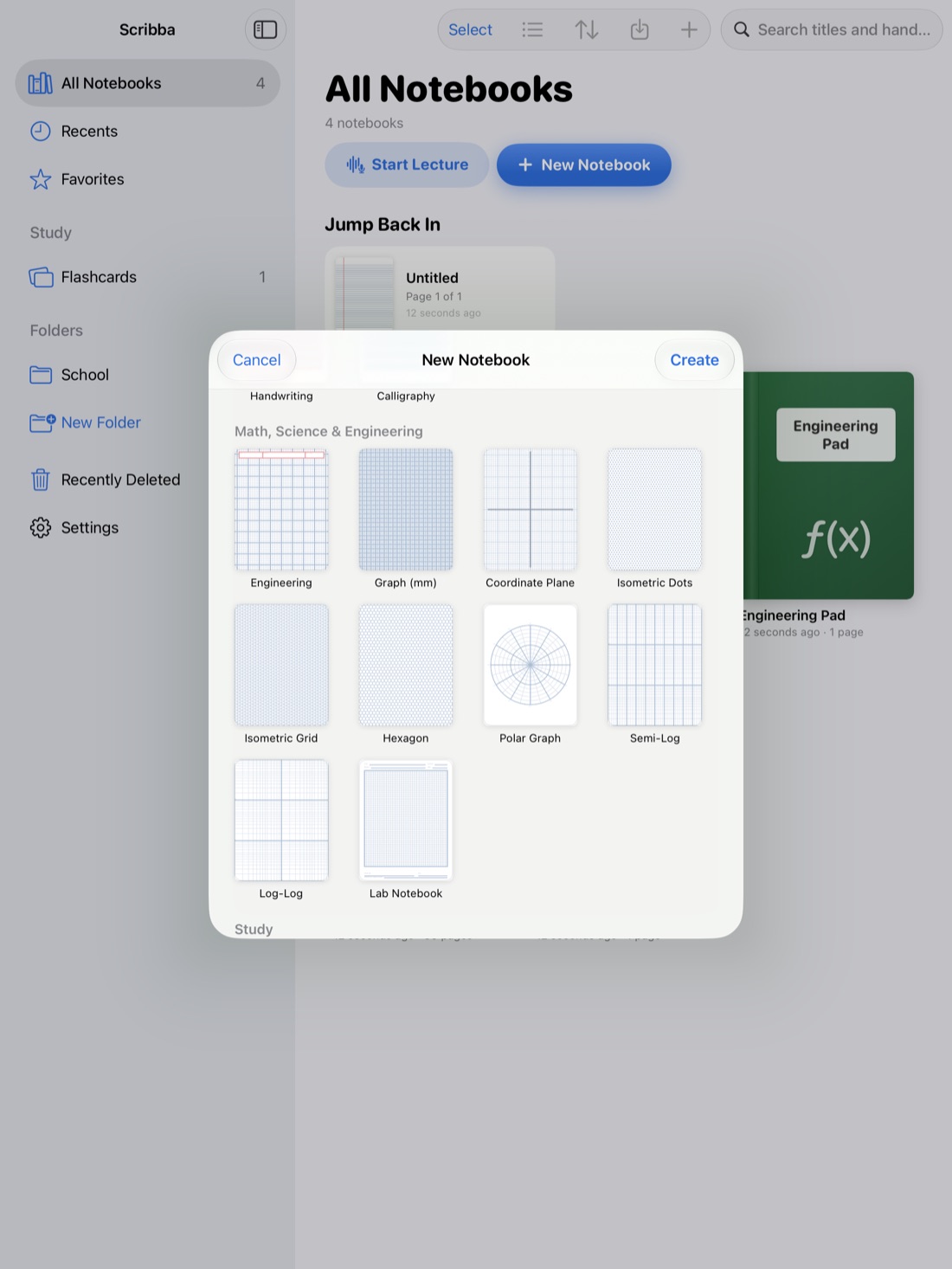
Scribba's Storyboard paper prints numbered SCENE frames with lines under each, 2 across in portrait or 3 across in landscape. Orientation is chosen when you create the notebook, so make a landscape notebook for wider rows. Sketch each shot in a frame with stick figures and boxes, and write the shot details on the lines underneath. The pencil pen type works well for quick frames, and holding the Apple Pencil still at the end of a stroke snaps a straight line or arrow for camera movement. For planning your own shoot rather than analyzing someone else's, see how to storyboard on iPad.
Organize the semester
Give the course its own notebook, with a page or two per film. Bookmark each film by title in the page sidebar so the notebook's table of contents becomes a list of every screening. Scribba searches your handwriting too, so searching a director's name or a term like "jump cut" finds every page where you wrote it.
Exams in film courses often ask you to compare films or apply a concept across several. Before the exam, make a page per concept, listing each film that shows it with one scene as evidence. That page is the plan for your essay answer. See studying for essay exams.
Frequently asked questions
How do I take notes during a film without disturbing people?
Use a dark page with light ink, turn screen brightness down, and write big without looking down for long. Write fewer words and expand them the same day.
Should I record audio during a screening?
No. Recording a film is rarely allowed, and you can rewatch it instead. Ask your professor before recording any lecture or discussion.
What should I write for a shot-by-shot analysis?
One line per shot: number, shot scale, angle, camera movement, what's in frame, and what the choice does for the scene.