 Scribba
College gives you more free time than high school did, and much less structure. Classes might fill only part of your day, and nobody checks whether you did the reading. That freedom is great until three deadlines land in the same week and you realize the "free" hours went somewhere you can't account for.
Time management isn't about filling every minute. It's about deciding where your time goes before the week decides for you. Here's a practical approach that works whether your days are packed with work shifts or wide open.
Find out where your time actually goes
Before changing anything, look at what you do now. For three or four ordinary days, jot down what you were doing every hour or so. Be honest; nobody else will see it.
Most students find a few surprises: a quick lunch that took two hours, a bus ride that could fit a round of flashcards, a long scroll every night before bed. You're not trying to cut everything fun. You're looking for the hours that disappear without you choosing them.
Separate fixed time from flexible time
Your week has two kinds of hours:
- Fixed: classes, labs, work shifts, practices, commutes and sleep. These don't move.
- Flexible: everything else. Studying, errands, friends and rest all compete for it.
Map the fixed hours first, then look at what's left. That's your real budget. If it looks thin, that's much better to know in week one than in week eight. How to make a study schedule walks through turning this into a weekly plan.
Decide what matters most
Not every task deserves the same attention. A simple way to sort them is to ask two questions about each: is it important, and is it urgent? This is often called the Eisenhower matrix.
- Important and urgent: do it now. A paper due tomorrow.
- Important, not urgent: schedule it. Studying for an exam three weeks out, starting a research project. This is where good grades come from, and it's the group that gets pushed aside.
- Urgent, not important: handle it quickly, or say no. Most messages and small requests.
- Neither: let it go.
Each evening, pick your top three tasks for tomorrow. If you finish those, the day went well, whatever else happened.
Block time, don't just list tasks
A to-do list says what to do. A calendar says when. Time blocking means giving each important task a specific slot: "Wednesday 10 to 11:30, outline the history paper." It turns intentions into appointments with yourself, and it shows you right away when a day is overbooked.
Keep blocks realistic. Most tasks take longer than you expect, especially writing and problem sets. Pad your estimates, and leave a little open time each day for whatever you didn't plan.
Use the gaps between classes
An hour between lectures can vanish into your phone, or it can be one of the most useful hours of your day. Good uses for short gaps:
- Review notes from the class you just left
- Do your due flashcards
- Skim the reading for your next class
- Answer emails and handle small admin tasks, so they don't eat your evening
Save long, uninterrupted blocks for work that needs deep focus, like essays, problem sets and exam prep.
Match tasks to your energy
Most people have hours when they think clearly and hours when they don't. Put your hardest work in your best hours. Use low-energy times for routine tasks: organizing notes, errands, laundry.
Sleep belongs in this plan too. Late nights borrow time from the next day, and tired studying tends to be slow studying. Protect a regular bedtime the way you protect class time. Sleep and studying explains why it matters.
Plan for crunch weeks
Midterms and finals stack deadlines on top of each other, and you can see those weeks coming from the syllabus in week one. When you spot one:
- Start something early. Move one assignment or one exam's review into the week before.
- Lighten the week itself. Swap a work shift if you can, and keep social plans small.
- Keep the basics. Sleep, meals and a bit of movement make a hard week go better, not worse.
Learn to say no, kindly
Clubs, extra shifts, group projects and social plans all want your time, and most of them are good things. But every yes takes hours from something else. Before you agree to something new, check your week. "I can't this week, but I could help next Tuesday" is a perfectly good answer.
Review every week
A plan made in September won't survive to December untouched. Once a week, look back at what happened, look ahead two or three weeks, and plan the next week. It takes 30 minutes to an hour and keeps the rest of this system working. See the weekly review routine.
Tip: when you fall behind, don't try to catch up on everything at once. Pick what's due soonest and what's worth the most, finish those, and let the rest wait.
Managing your time with Scribba
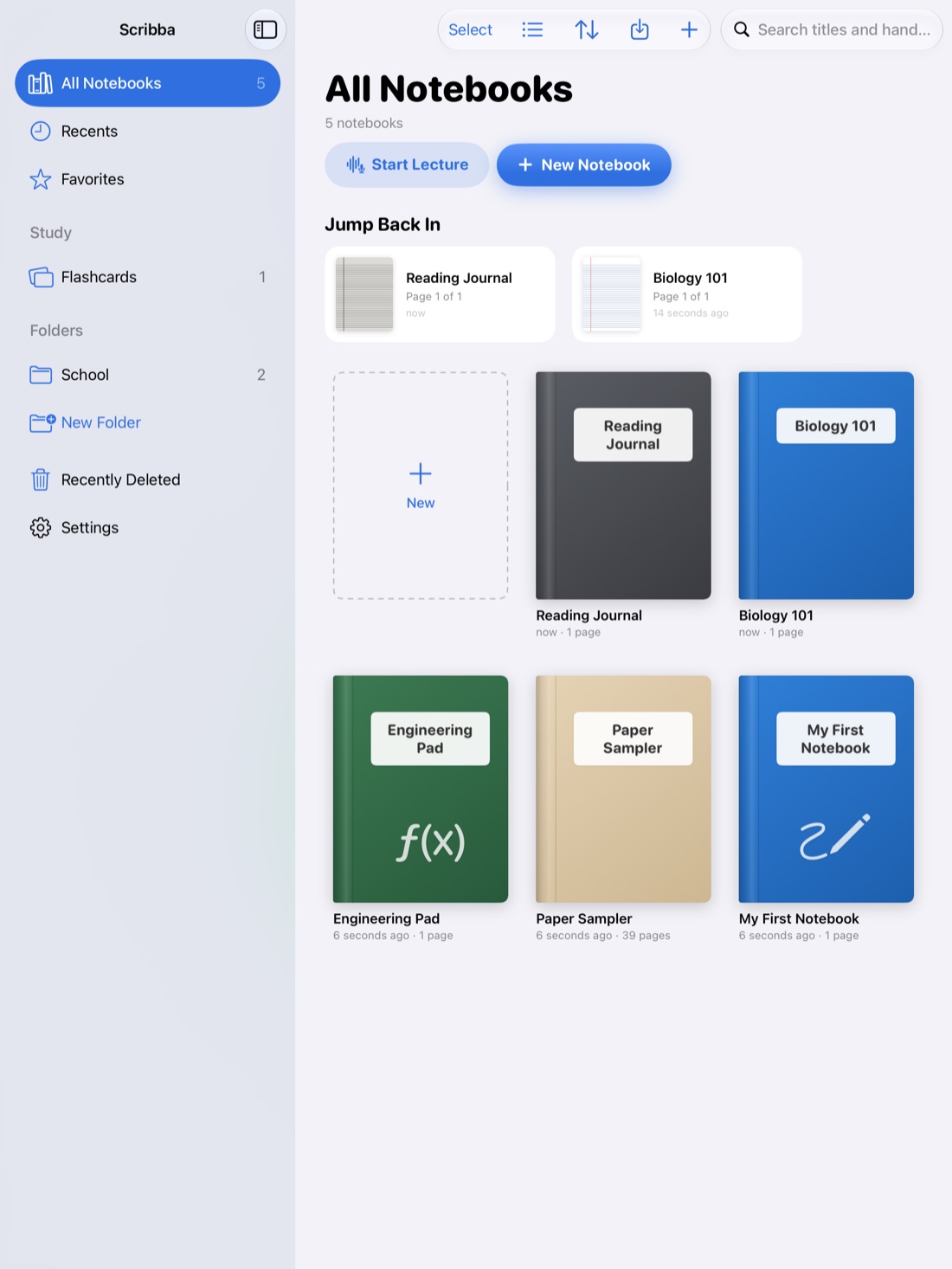
Scribba is an iPad notes app for students, with planning paper right next to your class notes.
- Daily Planner paper has a DATE line, an hourly SCHEDULE column, numbered TOP PRIORITIES, TO DO checkboxes and a NOTES area. That's a time-blocked day and your top three on one page.
- A dated planner gives you a month calendar plus weekly spreads, for one month up to a full school year, with the dates already filled in. The month view is where you'll spot crunch weeks early.
- To-Do List and Habit Tracker paper cover task lists and small daily habits, like reviewing notes after each class.
- The focus timer is a Pomodoro timer that follows you between notebooks, which helps a planned block actually happen. See how to use a Pomodoro timer for studying.
- Start Lecture adds a dated, bookmarked page to a class notebook and starts recording in one tap, so the minutes before class can go to reviewing instead of setting up. Ask your professor before recording.
Keep your planner as a favorite in the library so it's always one tap away. Scribba doesn't sync with your calendar app or with course sites like Canvas, so planner pages are handwritten. For the deadlines you can't afford to miss, add a reminder in your calendar app too.
Frequently asked questions
What's the best time management method for college students?
The one you'll keep using. A weekly plan with time blocks, a short list of daily priorities and a weekly review covers most students well. Start simple and add only what you need.
How do I balance a job and classes?
Treat your shifts as fixed time and plan study blocks around them. Use short gaps for review and flashcards, and talk to your employer early about exam weeks.
How much should I plan for each day?
Less than you think you can do. Leave open time every day for things that run long, and you'll finish your plan more often.