 Scribba
At some point in every semester, sleep starts to look like the most flexible thing in your schedule. Three exams, a lab report and a shift at work, and the hours between midnight and morning seem like free study time.
They aren't free. Sleep is when a lot of what you studied during the day gets stored for later, and the next day's focus depends on it. This guide covers what sleep does for learning in plain terms, why trading it for cramming tends to backfire, and how to plan your studying so you don't have to make that trade.
What sleep does for learning
Two things about sleep and memory are well established.
Sleep helps lock in what you learned. While you sleep, your brain replays and strengthens memories from the day. Material you studied before a good night's sleep tends to hold up better than the same material studied before a short or skipped one. In a real sense, part of studying happens after you close the book.
Sleep sets up tomorrow's learning. When you're short on sleep, it's harder to pay attention, hold several ideas in your head at once and take in new information. A lecture the morning after an all-nighter is a lecture you'll mostly have to learn again later.
You don't need to know the science in detail. The practical takeaway is simple: the night after you study is part of the study session.
Why all-nighters backfire
An all-nighter feels productive. You cover a lot of pages and you can see the progress. The cost shows up the next day, in the exam room:
- Recall gets slower. You may know the material, but pulling it up under time pressure is harder when you're exhausted.
- Careless mistakes go up. Misread questions, dropped signs and skipped parts of a prompt are the classic tired errors.
- The material doesn't stick. Even if you scrape through the exam, much of what you crammed fades quickly, and you'll be learning it again for the final.
- It costs the days after too. You start the rest of the week tired, right when other deadlines are stacking up.
If you're already behind, the better trade is usually less material, studied well, followed by real sleep.
Plan so you're not choosing between sleep and studying
Most all-nighters aren't a choice made that night. They're the result of a plan that started too late. A few habits prevent them:
- Work backward from the exam. List what's covered, count the days, and give each topic a slot. Leave the last day for review, not new material.
- Study in short, spread-out sessions. A little every day beats one long night. Spaced review is also simply better for memory; see spaced repetition flashcards.
- Set a stop time. Pick a time each night when studying ends, and put it in your plan like a class. A deadline makes earlier sessions more focused too.
- Put the hardest work earlier in the day. Problem sets and new material need a fresh head. Light review is fine later.
- Watch exam weeks early. When you see three exams in four days on your calendar, start the first one's prep a week ahead, not the night before.
- Protect the night before the exam. Plan a short review of your weak spots, pack what you need, and go to bed at your usual time.
Tip: end your evening with a short recall session instead of new reading. Quiz yourself on today's material, then stop. It's a natural wind-down, and it's what you want fresh in your mind before you sleep.
If you're already short on time
Sometimes the plan falls apart anyway. When the exam is tomorrow and you're behind, prioritize instead of pulling an all-nighter: focus on the topics most likely to be tested, use practice questions instead of rereading, and still get to bed. Our midterm-in-a-week guide shows how to triage a short timeline.
If you have trouble sleeping most nights, not just during exams, talk to a doctor or your campus health center.
Planning your study around sleep in Scribba
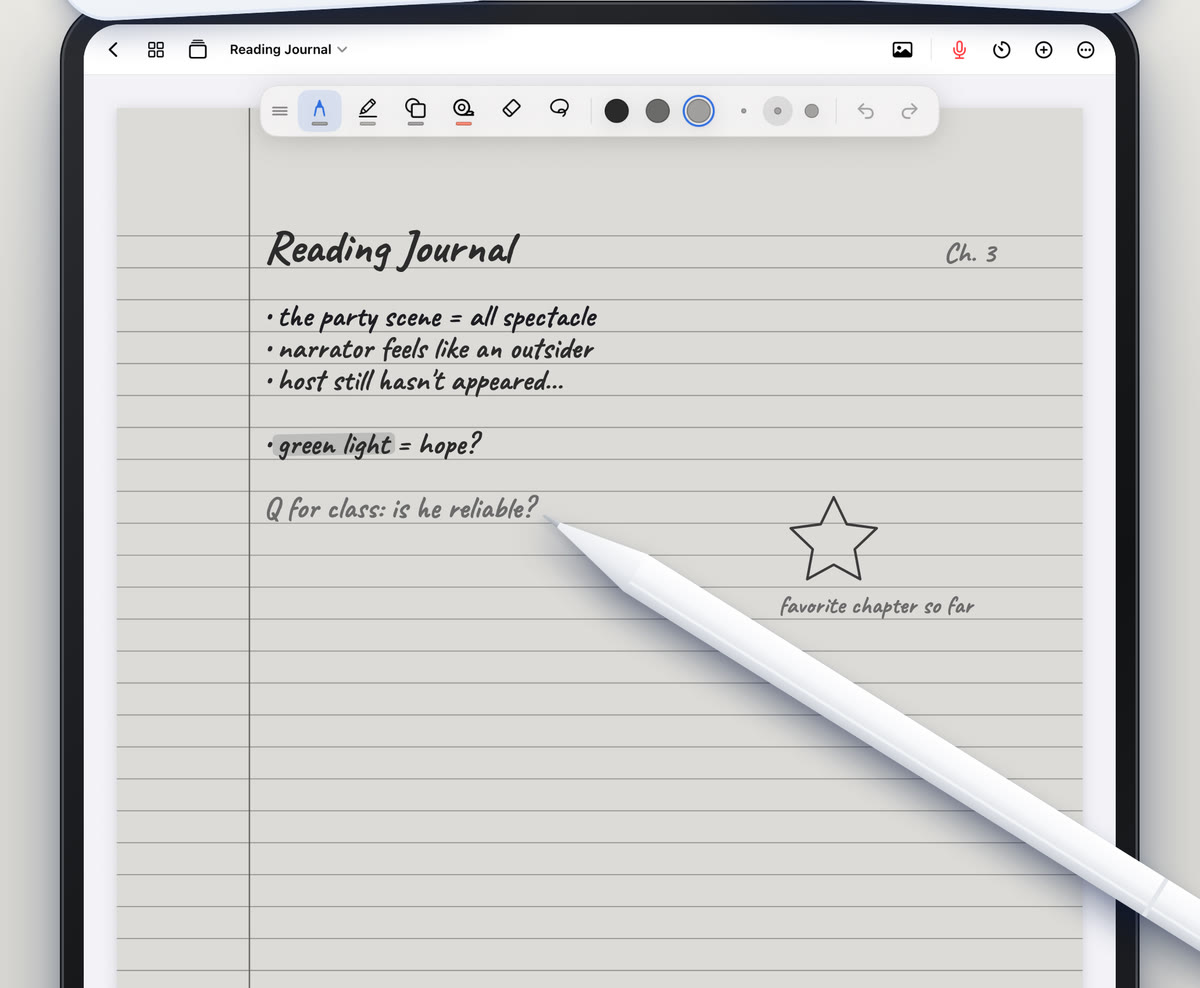
Scribba is an iPad notebook for class. It won't make you go to bed, but a few of its tools make it easier to study in a way that leaves room for sleep.
Plan the week on paper. Scribba can generate a dated planner, from one month up to a full school year, with a month calendar and weekly spreads. Write each study session into the Weekly Planner's day boxes, along with your stop time. For more on planning a semester, see an iPad planner for the school year.
Keep sessions short with the Focus timer. Scribba has a Pomodoro-style Focus timer that follows you between notebooks. A few focused blocks and a hard stop beat an open-ended night. The Pomodoro guide explains how to use it.
Review a little every day. Flashcard decks use spaced repetition, so cards come back after 1, 3, 7, 14 and 30 days. You can study all your due cards at once, which keeps daily review short enough to finish before bed.
Show the clock. Scribba hides the iPad's status bar by default so notes get the whole screen, which also hides the time. If you lose track of it while studying, turn on Settings › Screen › Show Time and Battery.
Make evening review easier on your eyes. If you review in a dim room, some students prefer Charcoal or Black paper, or the soft gray E-Ink paper. You can change a page's paper from the page sidebar. More in dark paper for studying at night.
Frequently asked questions
Is it better to study late or wake up early?
Either can work if you still get a full night's sleep. What matters most is not cutting the night short. Do the hardest work whenever you're most alert.
Should I review right before bed?
A short recall session in the evening is a good habit. Keep it brief, avoid starting new material, and stop at your planned time.
Can I make up for an all-nighter by sleeping in?
Catching up helps you feel better, but it doesn't fully undo the effect on the exam you took while tired. Planning ahead so you don't need the all-nighter is the better fix.