 Scribba
Most flashcard decks fail quietly. You flip through them every night, you feel like you know them, and then the exam asks the same idea in different words and you blank. Usually the problem isn't the studying. It's the cards.
A good card has one clear question with one short answer you can check. Below are the rules that get you there, each with a weak card and a better rewrite, so you can fix the deck you already have.
Signs your cards need work
Before rewriting anything, look for these symptoms while you study:
- You know the answer from the card, not the content. You recognize the card's shape or its first word and the answer pops out. Ask the same thing differently and it's gone.
- You grade yourself "close enough." If you often say half the answer and count it, the card is asking for too much.
- The answer is a paragraph. Long answers are hard to check, so you end up skimming them.
- You keep missing the same card. That's often a vague or overloaded card, not a memory problem.
Rule 1: one fact per card
The most common mistake is putting a whole topic on one card.
- Weak: "Causes of World War I" on the front, four causes on the back.
- Better: a separate card for each cause ("Which 1914 assassination set off the July Crisis?"), plus one card that asks only for the list.
Small cards feel slower to make. They're faster to study, because each one has a clear right or wrong answer, and spaced repetition can bring back just the cause you keep forgetting instead of the whole bundle.
Rule 2: ask a question, not a label
A single word on the front is a label. It invites a vague answer and you'll grade it generously.
- Weak: "Mitochondria."
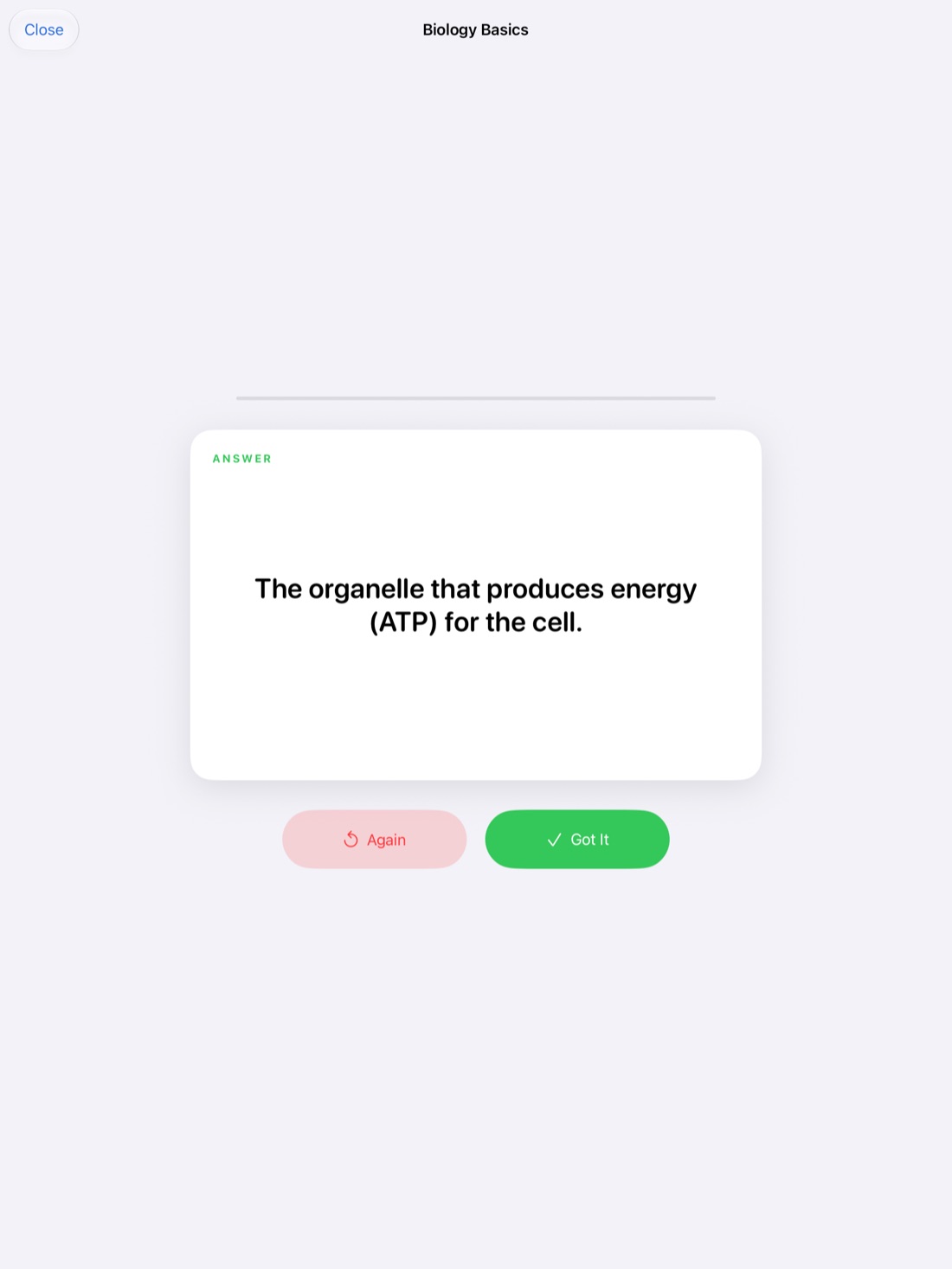
- Better: "Which organelle makes most of the cell's ATP?"
- Weak: "Opportunity cost."
- Better: "You skip a $50 shift to study. What is the opportunity cost of studying?"
The second version of each has one answer, and it's checkable. Avoid yes-or-no and either-or questions too. You can guess them, and a guess that happens to be right teaches you nothing.
Rule 3: ask why and how, not only what
Exams ask you to use facts, not just repeat them. Mix in cards that ask for reasons and mechanisms:
- "Why does adding salt raise the boiling point of water?"
- "How does a price ceiling cause a shortage?"
- "What would happen to cellular respiration if oxygen ran out?"
Keep the answers short, a sentence or two. If the explanation needs a page, it's a study tape job, not a flashcard.
Rule 4: use pictures where words fall short
Some things are easier to recognize than describe: a cell structure, a graph shape, a painting, a bone, a chord on a staff. For these, the picture is the question.
- Label-the-diagram cards: a diagram with one part marked, asking "What is this?"
- Picture as prompt: a supply-and-demand graph after a shift, asking "What changed?"
- Your own sketch: a rough drawing you made yourself is often easier to remember than a perfect textbook figure.
Covering labels on a diagram you already drew in your notes works just as well, and you don't need to make a card at all.
Rule 5: make cards hard to fake
A few smaller habits keep a deck honest:
- Use fill-in-the-blank for key sentences. "The ___ is the powerhouse of the cell" is fine when the sentence itself is worth knowing.
- Add context to look-alikes. If two terms sound alike, put a few words of difference on the back of each card.
- Tag the subject when cards look similar. "(Psych) What is conditioning?" keeps your psychology and biology decks from blurring in a mixed session.
- Use your own examples. An example from your own life is easier to recall than one copied from the textbook.
- Delete or rewrite bad cards. If a card isn't working after a few reviews, fix it on the spot. A shorter deck of good cards beats a long deck of vague ones.
Tip: say the answer out loud before you flip. It's much harder to fool yourself when you have to produce actual words.
Building good cards in Scribba
Scribba is an iPad notebook for class. Its flashcards come from your handwriting, so the rules above start on the page you take notes on. This works on any iPad that runs Scribba, without Apple Intelligence.
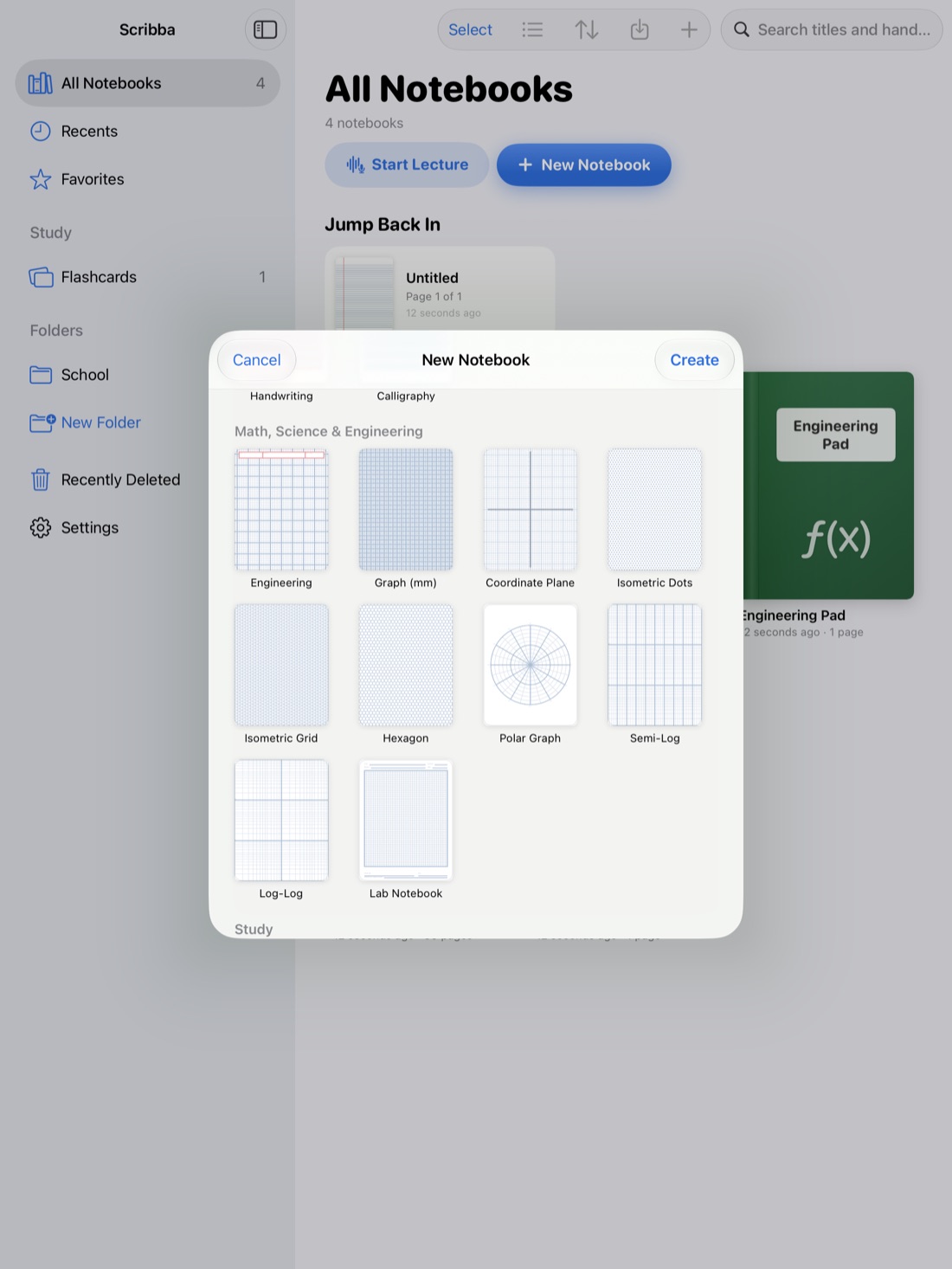
Vocabulary pages: one row, one card. Vocabulary paper has two columns, TERM and DEFINITION / EXAMPLE. Scribba turns each row into a card. Keep one term per row (rule 1) and the definition short and in your own words. You can pick the paper when you add a page, or change an existing page's paper from the page sidebar.
Cornell pages: write cues as questions. The CUES & QUESTIONS column on Cornell Notes paper becomes the front of each card. Write "Which organelle makes most of the cell's ATP?" there, not just "mitochondria" (rule 2). The Cornell notes guide covers the rest of the method.
Review before you study. Scribba reads your handwriting and lays out the cards, and you check them and fix any word it misread. That review is also a good moment to split overloaded cards.
Type the cards that don't fit a page. You can create a deck by hand: give it a title, tap Add Card and type a Front and Back. Cards can be edited, reordered and deleted, so rewriting a bad card takes seconds.
Keep pictures on the page. For diagrams, drag study tape over the labels and tap to peek, instead of turning them into cards. See study tape on iPad.
Drafts from any page. On iPads that support Apple Intelligence, with it turned on, Scribba can also write cards from any page of notes or a lecture transcript. Read them through with the rules above before you rely on them.
Every deck uses spaced repetition, bringing cards back after 1, 3, 7, 14 and 30 days, and you can export a deck to Quizlet or Anki. More in making flashcards from handwritten notes.
Frequently asked questions
How many flashcards should I make per lecture?
As many as there are separate facts you'll need, and no more. Skip what you already know cold, and don't make cards for things that are easier to practice as problems.
Should I use premade decks?
They can save time, but writing the cards yourself is a round of studying in itself, and you'll word them the way you think. If you use a premade deck, edit cards that don't match how your class teaches the topic.
Is it better to handwrite or type flashcards?
Both work. What matters more is following the rules above. In Scribba you can do either: write on a Vocabulary or Cornell page, or type cards into a deck.